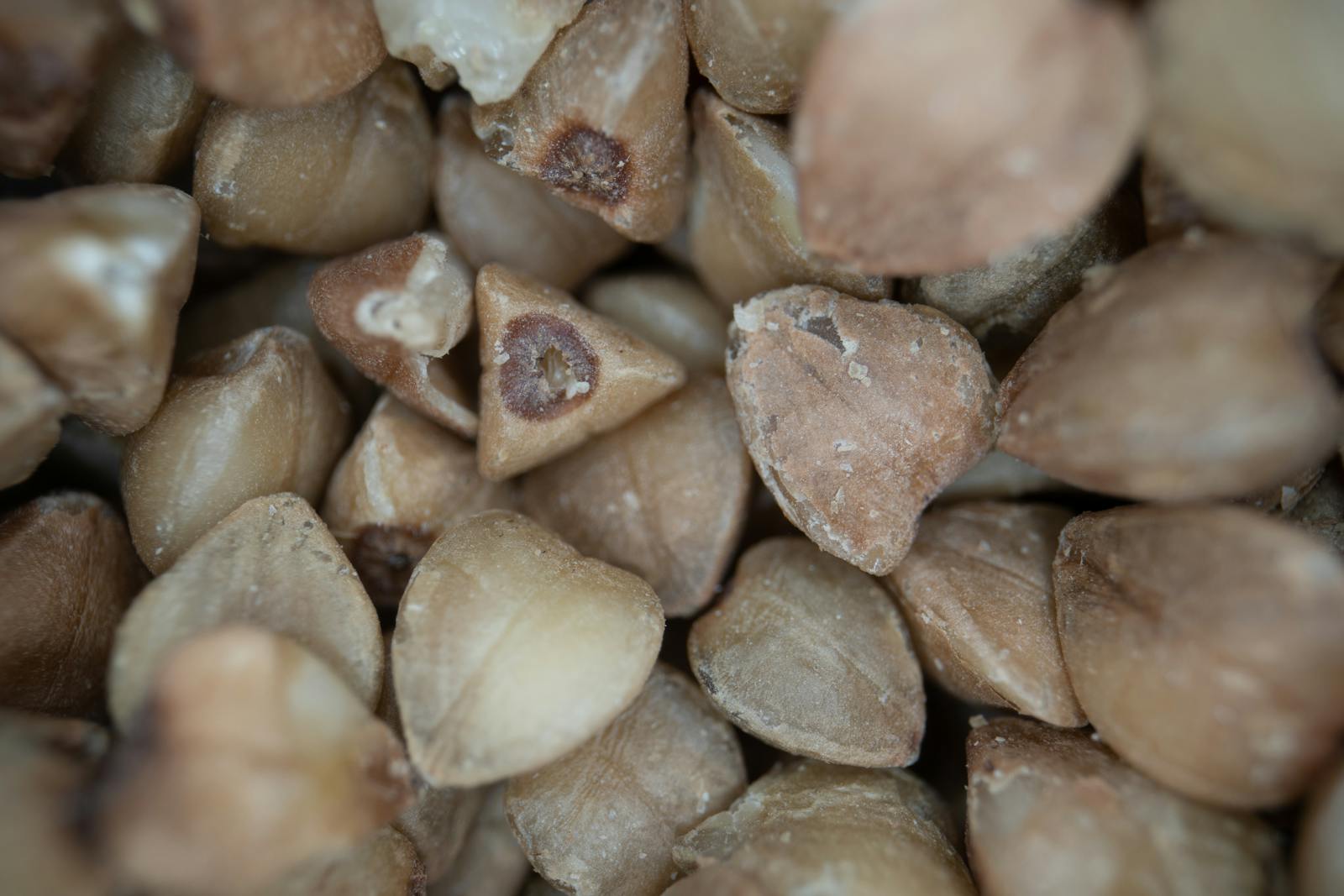
If sorghum flour is the quiet team player of the gluten-free pantry, buckwheat flour is its loud opposite. A good buckwheat flour is the one I reach for when I want a bake to taste of something, properly taste of something, instead of behaving like a wheat impersonator. The flavour is earthy, faintly grassy, more like a dark rye or a strong wholemeal than anything pale and refined. It is also one of the easiest gluten-free flours to misuse, because almost nothing about it behaves like wheat.
This is the flour-focused companion to our buckwheat pancake recipe and our is buckwheat gluten free explainer. This one is about the bag of flour itself: what it is, where it shines, where it fails, and how to handle the light-versus-dark question that trips up most home bakers.
Quick answer: Buckwheat flour is finely milled buckwheat, a naturally gluten-free pseudocereal that is not wheat at all but a relative of rhubarb. It has a bold, earthy, faintly grassy flavour and bakes up dark, and because it has no gluten it needs eggs or a binder to hold together. It shines in egg-bound batters like blini, Breton galettes, and pancakes, and works at 25 to 50 percent in dark, strongly flavoured blends.
What is buckwheat flour?
Buckwheat flour is finely milled whole-grain buckwheat, a pseudocereal that is botanically closer to rhubarb than to wheat. Despite the name, it contains no wheat and is naturally gluten-free. The plant is Fagopyrum esculentum, a broadleaf species, not a grass, which is the same distinction that puts quinoa and amaranth in the pseudocereal category.
Two practical forms turn up on shelves:
| Form | What it is | Use for |
|---|---|---|
| Light buckwheat flour | Hulled groats milled to a finer, paler flour | Pancakes, blini, lighter bakes |
| Dark buckwheat flour | Whole unhulled groats milled with the hull in | Galettes, soba, dark crackers, strong-flavour bakes |
Almost all American shops sell the dark version; in Europe both are common. Japanese soba flour (sobako) is a buckwheat flour of variable extraction, similar to light. If a recipe says “buckwheat flour” without specifying, the dark is the safer assumption.
How does buckwheat flour behave in baking?
It binds nothing without help, it tastes emphatically of itself, and it bakes up dark. Three things matter here.
- It has no gluten and almost no binding. Even more than sorghum, buckwheat dough has no structure. It needs eggs, xanthan gum, psyllium, or a blend partner to hold together.
- The flavour is strong and not negotiable. Buckwheat tastes of itself. You cannot hide it. If you put it in a vanilla cake, the cake tastes of buckwheat, faintly bitter and earthy. Plan around the flavour, do not against it.
- The colour is dark grey-russet, not pale. A buckwheat pancake comes out the colour of a 70% rye loaf. This surprises people who expect a wheat pancake.
The chemistry note worth knowing: buckwheat is unusually high in lysine for a cereal-shaped food, which is why it has been a useful complementary protein in cuisines that pair it with rice (Japan, Russia). The USDA FoodData Central buckwheat entry puts whole buckwheat flour at roughly 335 kcal, 12g protein, and 10g fibre per 100g.
Can you substitute buckwheat flour 1:1 for wheat flour?
In a small number of cases, yes. In most cases, no. Two rules of thumb apply after a decade of working with the flour.
- For egg-bound batters (pancakes, blini, crepes, waffles, savoury cakes), 100% buckwheat works, because the eggs are doing the binding job that gluten would have done. The flavour comes through hard, which is exactly what you want in these dishes.
- For anything yeasted, structural, or supposed to taste neutral (sandwich bread, white cake, sponge), use 25-50% buckwheat in a blend with a milder base flour like rice or sorghum flour, plus a binder. More than 50% and the dough collapses; less than 25% and the flavour disappears.
Here is the substitution guidance I give my students:
| Recipe type | Buckwheat proportion | Notes |
|---|---|---|
| Pancakes, blini, galettes | Up to 100% | Eggs do the binding |
| Crepes (French style) | 50-100% | Traditional Breton galettes are 100% |
| Soba noodles | 30-100% | 100% is hard; 30% wheat is easier |
| Quick breads, dark muffins | 30-50% | Pair with sorghum or rice flour |
| Cookies (dark/spiced) | 25-50% | Excellent in ginger or molasses cookies |
| Yeasted bread | 15-25% | Higher and the loaf collapses |
| White cake, sponge | Skip | Wrong flavour, wrong colour |
| Light pastry | Skip | Too dark and dense |
| Roux thickener | 100% | No structure needed |
What is the difference between light and dark buckwheat flour?
Light buckwheat flour is milled from hulled groats: the dark outer hull is removed before milling. It is paler (a soft fawn rather than grey), milder in flavour, and slightly finer in texture. Dark buckwheat flour is milled with the hull included, which adds colour, fibre, and a stronger, more pronounced flavour.
For Russian blini, traditional recipes use light buckwheat for a more tender pancake. For French galettes, dark buckwheat is the right choice because the flavour is the whole point. For Japanese soba, mill quality matters more than light vs dark; sobako is its own category.
If a recipe does not specify, dark is the default in North American shops because it is what most brands (Bob’s Red Mill, Arrowhead Mills, Anson Mills) sell. If a recipe seems to assume a milder, paler flour, the writer is probably working with light buckwheat.
Where does buckwheat flour shine?
Blini, Breton galettes, soba, dark spiced cookies, and pancakes. Five places where buckwheat is genuinely the right choice, not a wheat substitute, stand out.
Russian blini. Yeasted, leavened, traditionally a light buckwheat batter. Served with sour cream and smoked fish. The dish that put buckwheat on the global map.
French Breton galettes. 100% dark buckwheat flour, salt, water, sometimes a single egg. Cooked on a flat griddle and folded around savoury fillings. This is the dish that proves buckwheat does not need help to be excellent.
Japanese soba noodles. A higher buckwheat ratio (50-100%) produces the chewy, dark, faintly bitter noodle that defines real soba. Most supermarket soba is closer to 30%, which is fine but milder.
Dark spiced cookies. Buckwheat in molasses cookies, gingerbread, chocolate-rye-style cookies, anywhere the existing flavour profile is dark and earthy. The flour adds depth, not interference.
Pancakes. Our buckwheat pancake recipe covers this in detail. The short version: buckwheat plus buttermilk plus a 15-minute rest gives you a tender, deeply flavoured Sunday-morning stack that no wheat pancake can replicate.
Where does buckwheat flour disappoint?
Anywhere you wanted neutral flavour, pale colour, or light texture. White cake. Vanilla cupcakes. Light Italian bread. Brioche. Anything where you wanted the flour to step back and let other flavours lead. Buckwheat will not step back.
This is why the comparison to sorghum flour matters: the two are perfect partners precisely because they fail at the opposite jobs. Sorghum is mild and fine-textured but flavour-thin. Buckwheat is flavour-loud but flavour-monodimensional. A blend that uses both gives you depth without dominance, which is why most professional gluten-free flour blends include some of each.
How should I store buckwheat flour?
In the fridge or freezer. Because buckwheat is milled with the germ, it contains oils that go rancid at room temperature within 2-3 months and produce a faintly bitter, paint-like off-flavour. Refrigerated, the flour keeps about 6 months; frozen, up to a year. This is the same rule as our einkorn flour, sorghum flour, and any other whole-grain flour. Sealed, cold, out of light.
A rancid buckwheat is genuinely unpleasant in a way that rancid sorghum is not, because buckwheat’s existing flavour is already strong and the rancid notes amplify on top of it. If a bake comes out tasting metallic or bitter, suspect old flour first.
How does buckwheat flour compare to other gluten-free flours?
Buckwheat is the loud one: the strongest flavour in the gluten-free pantry, where sorghum and rice play quiet, as the quick reference below shows.
| Flour | Flavour | Texture | Best for | Worst for |
|---|---|---|---|---|
| Buckwheat | Strong, earthy | Dense | Galettes, soba, dark bakes | White cake, sponge |
| Sorghum | Mild, slightly sweet | Fine, soft | Blends, quick breads | Strong-flavour bakes (it disappears) |
| Brown rice | Neutral | Slightly sandy | Blend filler | Anything wanting flavour |
| Oat | Mild, oaty | Soft | Pancakes, cookies | Yeasted bread |
| Almond | Rich, nutty | Moist | Cakes, low-carb | Bread |
| Quinoa | Slightly bitter, grassy | Fine | Crackers, pancakes | Neutral bakes |
| Teff | Molasses-dark, nutty | Fine | Injera, dark bread | Pale bakes |
If you are building a gluten-free pantry, our gluten-free grains hub covers the whole flour and grain landscape. For broader context on how heritage grains compare, our emmer vs einkorn explainer covers the gluten-bearing side, and quinoa history traces the parallel pseudocereal story for the Andes. The Wikipedia buckwheat entry is solid on the botany if you want to go further.
Start with pancakes. Then a Breton galette. By the third bake you will have stopped trying to make buckwheat behave like wheat, which is the only mistake that really matters with this flour.
Frequently asked questions
Is buckwheat flour gluten-free?
Yes. Despite the name, buckwheat is not wheat and not even a grass; it is a pseudocereal related to rhubarb, so its flour contains no gluten and is safe for celiacs, as our is buckwheat gluten free explainer covers. Buy a certified bag if cross-contamination during milling is a concern.
Is buckwheat flour healthy?
It is one of the more nutritious gluten-free flours. Whole buckwheat flour is high in fibre and plant protein, and it is unusually rich in the amino acid lysine, which most cereal grains lack, making it a strong complementary protein.
Why does my buckwheat flour taste bitter?
Some earthy, faintly bitter flavour is normal, especially with dark buckwheat flour milled with the hull. A sharper, metallic bitterness usually means the flour has gone rancid; because it is whole-grain, store it cold and use it within a few months.
Ready to start baking with buckwheat?
See our hand-picked buckwheat flour and whole grain, with quality brands ready to ship.
Shop buckwheat →