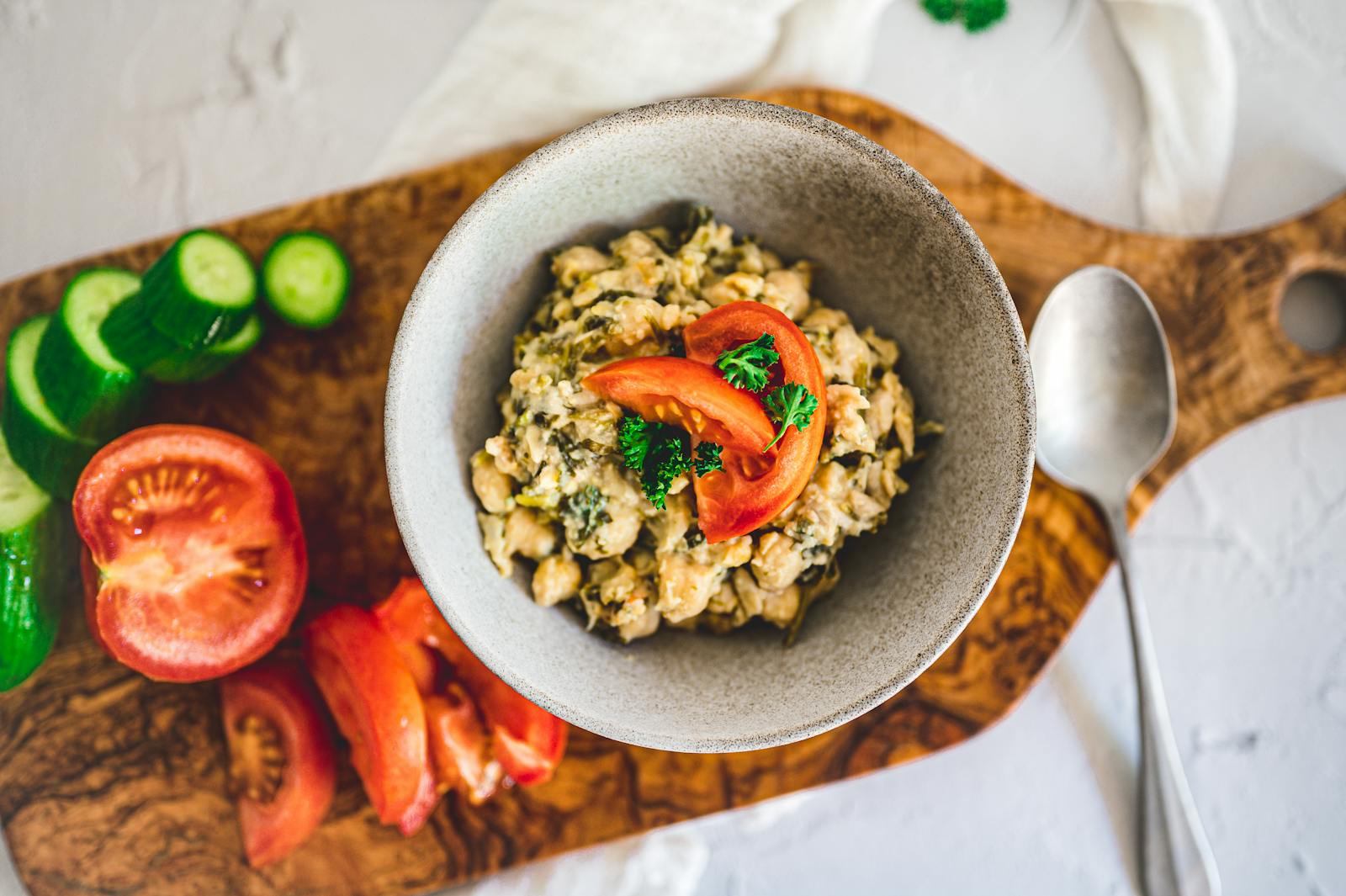
The quinoa chickpea salad I make every week is a fusion: a Levantine flavour profile (lemon, parsley, mint, cumin, sumac, garlic) wrapped around a New World pseudocereal that did not arrive in Eastern Mediterranean kitchens until the late 20th century. It works because quinoa carries the bright acidity of a tabbouleh-style dressing as well as bulgur does, and pairing it with chickpeas gives you a complete protein in one bowl that is naturally gluten-free, vegan-adaptable, and at its best on the second day.
This is the chickpea-anchored sibling to our Greek quinoa salad post. Both come from the same modern Mediterranean-fusion tradition. Both are gluten-free because they use quinoa instead of the traditional bulgur (see is quinoa gluten free for the underlying answer). The Greek version leans olive-and-feta; this one leans lemon-and-spice.
Quick answer: Quinoa chickpea salad is a gluten-free, protein-rich bowl that wraps a Levantine flavour profile, lemon, parsley, mint, cumin, and sumac, around quinoa and chickpeas. Cook the quinoa dry and cool it fully, then toss with chickpeas, cucumber, tomato, red onion, and herbs in a lemon-garlic-sumac dressing. Quinoa is a complete protein and chickpeas add lysine, so together they make a more-than-complete protein. It keeps and even improves for up to three days, and it is naturally gluten-free and easily vegan.
What goes in a proper quinoa chickpea salad?
Quinoa, chickpeas, cucumber, tomato, and red onion, heavy on parsley and mint, dressed with lemon, olive oil, garlic, cumin, and sumac. Here is the full recipe, scaled for 4 mains or 6 sides.
- 1 cup (170 g) dry quinoa, white, red, or tri-color
- 2 cups (480 ml) water or vegetable broth
- 1/2 tsp fine salt, for the quinoa
- 1 1/2 cups (250 g) cooked chickpeas (one 15-oz can, drained, or cooked from dry)
- 1 1/2 cups (200 g) English cucumber, diced
- 1 1/2 cups (250 g) cherry or grape tomatoes, halved
- 1/3 cup (50 g) red onion, fine dice
- 1/2 cup (30 g) flat-leaf parsley, chopped
- 3 tbsp (12 g) fresh mint, chopped
- 3 tbsp (45 ml) lemon juice (about 1 1/2 lemons)
- 1/4 cup (60 ml) extra-virgin olive oil
- 1 small garlic clove (3 g), microplaned (about 1/2 tsp)
- 1 tsp (2 g) ground cumin
- 2 tsp (4 g) ground sumac
- Fine sea salt and black pepper, to taste
- Optional: 1/2 cup (80 g) crumbled feta
The non-negotiables in my kitchen are the sumac and the fresh herbs. Sumac is the bright magenta Levantine spice from the dried berry of the sumac shrub; it tastes faintly lemony, faintly sour, and entirely distinct from any other pantry spice. Without it, this salad is a generic Mediterranean grain bowl. With it, it tastes like Aleppo, like Beirut, like the food of the eastern Mediterranean coast where I have done my most serious eating.
How do you cook quinoa for a salad?
The single most important rule: cook the quinoa dry and cool it fully before mixing. Warm quinoa weeps moisture into the dressing, dilutes the acid, and turns the salad sad within an hour. It is the same approach as our Greek quinoa salad post.
- Rinse 1 cup of dry white quinoa under cold water for 20 seconds. This removes residual saponin bitterness.
- Toast the rinsed quinoa dry in a saucepan over medium heat for 3-4 minutes, stirring, until it smells nutty. This is the single biggest flavour upgrade in any quinoa dish and the step most home recipes skip.
- Add 2 cups of cold water or broth and 1/2 teaspoon salt. Bring to a boil, drop to a low simmer, cover, cook 15 minutes.
- Off the heat, leave covered another 10 minutes.
- Fluff with a fork, spread on a sheet pan, and cool to room temperature (about 20 minutes) before mixing.
- Whisk the lemon juice, olive oil, garlic, cumin, sumac, and a pinch of salt and pepper into a dressing.
- Toss the cooled quinoa with the chickpeas, cucumber, tomatoes, onion, parsley, and mint. Pour the dressing over, toss again, and fold in the feta last if you are using it. Rest 10 minutes and taste for salt before serving.
These are the same fundamentals that show up in our millet recipes roundup and every grain-salad post on the site. Cool grain, then dress.
Why is quinoa + chickpea a nutritionally exceptional combination?
Both quinoa and chickpeas are unusually protein-dense for plant foods, and together they cover all nine essential amino acids in good proportions. Quinoa alone is already a complete protein (one of the few plant foods that is). Chickpeas are not quite complete (slightly low in methionine and cystine) but compensate with high lysine. Together they form a more-than-complete protein profile and stack about 18g of protein into a 350-calorie serving of this salad.
The USDA FoodData Central quinoa entry puts cooked quinoa at ~4.4g protein per 100g; the chickpea entry puts cooked chickpeas at ~8.9g per 100g. The combination is one of the most genuinely nutritious gluten-free vegan meals you can put on a plate.
For the broader gluten-free protein-pairing conversation, our quinoa history post covers why Andean cultures built a daily diet around this grain, and the amaranth grain page covers the related pseudocereal with a similar amino-acid story.
What is sumac and where do I find it?
Sumac is the dried, ground berry of Rhus coriaria, a shrub native to the eastern Mediterranean and the Middle East. It has been a staple souring agent in Levantine cooking for over a thousand years, predating the lemon’s arrival in the region. The taste is tart, faintly fruity, and entirely its own thing. The colour is deep magenta-red.
In US shops, look in the spice aisle of well-stocked supermarkets, any Middle Eastern grocer, or online. Penzey’s and The Spice House both carry good versions. A jar costs about $5-8 and lasts a year. Buy it. This salad makes the case for keeping it in your spice drawer permanently, and once you have it, fattoush salad, za’atar mix, and shawarma-spiced anything become easy.
Four variations worth knowing
Once you have the base recipe in your hands, the variations stack neatly:
- Add roasted vegetables. Cubes of roasted butternut squash, sweet potato, or eggplant turn this into a substantial winter main. Roast at 220°C / 425°F until caramelised at the edges, then fold in once cool.
- Swap to za’atar dressing. Replace the cumin and sumac with 2 teaspoons of za’atar (the Levantine herb-and-sesame mix). Different flavour profile, equally Levantine, slightly more sesame-forward.
- Add Kalamata olives and feta. This shifts the salad toward the Greek end of the spectrum and converts it almost into our Greek quinoa salad. Use both posts as bookends of the same Mediterranean range.
- Pivot to Latin American with cilantro and lime. Swap parsley for cilantro, swap lemon for lime, drop the cumin to 1/2 teaspoon, add 1/4 teaspoon chipotle, and fold in a diced avocado at the end. The same complete-protein structure with a completely different mood.
How do I make this ahead?
This salad gets better on the second day. Make it the night before you need it, store covered in the fridge, and pull it out 30 minutes before serving to take the chill off. Three full days in the fridge is reasonable; past that, the cucumber starts weeping water and the texture goes soft.
For meal prep, my favourite move is to make a double batch on Sunday, eat one portion right away for dinner, and pack the rest into single-serving containers for lunches Monday through Wednesday. The flavour peaks on day two, which is the opposite of most salads.
What do I serve with it?
Pita and hummus, sumac-grilled chicken, charred eggplant, or a roasted whole fish. Here are a few honest pairings.
- Pita and hummus. Use a certified gluten-free pita or skip if avoiding gluten. Hummus doubles the chickpea theme.
- Grilled chicken with sumac. Marinate chicken thighs in lemon, olive oil, sumac, garlic, and salt. Grill, slice, serve over the salad as a main.
- Charred eggplant. The smokiness pairs especially well with the lemon-mint freshness.
- Roasted whole branzino or trout. A Mediterranean coastal dinner, gluten-free by default.
For the broader gluten-free grain landscape this dish sits in, our gluten-free grains hub covers the full pantry, the quinoa flour post covers what to do with the same grain in baking form, and the emmer vs einkorn explainer covers the heritage-wheat contrast (those grains, unlike quinoa, are not gluten-free despite the “ancient grain” marketing).
Make it once with proper sumac and good lemons. By the third bowl on day three of the leftovers, you will have made the case for keeping the jar in the cupboard year round. Quinoa, chickpeas, lemon, the eastern Mediterranean herb shelf: not a traditional pairing in the strict sense, but one of the most genuinely useful weekly recipes I cook.
Frequently asked questions
Is quinoa chickpea salad gluten-free?
Yes. It is built on quinoa and chickpeas, both naturally gluten-free, so it is safe on a gluten-free diet, unlike a traditional bulgur tabbouleh. Just serve it with certified gluten-free pita if you want bread alongside, and check any store-bought spice blends.
Is quinoa chickpea salad vegan?
Yes, as written, if you skip the optional feta. The quinoa, chickpeas, vegetables, herbs, and lemon-sumac dressing are all plant-based, and the chickpeas plus quinoa already make a complete protein, so it holds up as a vegan main with nothing added.
What can you use instead of sumac?
Sumac’s job is a tart, fruity sourness, so the closest quick swap is extra lemon, a little zest plus a squeeze more juice, or a spoonful of za’atar, which already contains sumac. Neither is identical, but both keep the salad bright; it is worth buying real sumac if you can, since a jar lasts a year.
Stock up on Quinoa
See our hand-picked Quinoa, from flour to whole grain, with the brands worth buying.
Shop Quinoa →