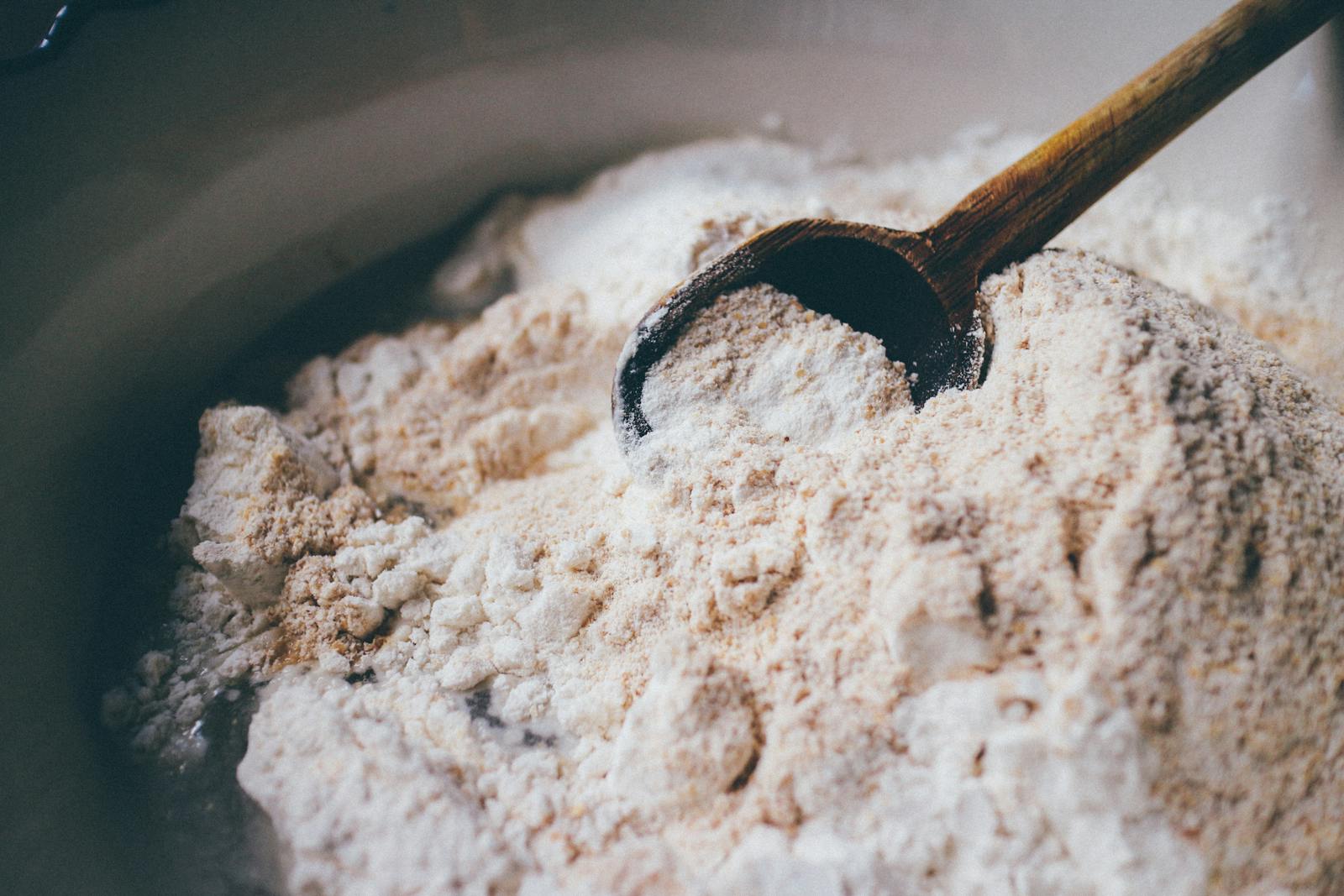
I’ll say it plain, y’all: if you want to bake with heritage wheat and you don’t fancy fighting your dough every weekend, start with spelt flour, not einkorn. I keep a sack of each in my Tennessee bakery, and the spelt is the one I reach for when a customer asks for “something heritage” without a sourdough class to back it up. Spelt is forgiving, it substitutes neatly into most modern recipes, and it carries a nutty whole-grain flavour that biscuits and sourdough boules drink up beautifully.
The headline: spelt flour is hexaploid wheat flour, genetically much closer to modern bread flour than einkorn is (we cover the chromosome story in our einkorn vs spelt post). It behaves like a slightly slacker, slightly faster-fermenting version of whole-wheat flour. The handling differences are corrections, not reinventions. The post you are reading is the flour-focused companion to today’s spelt bread recipe, and the same template my colleagues used for our einkorn flour and sorghum flour guides.
Quick answer: Spelt flour is milled from spelt, an ancient hexaploid wheat, and it is the heritage flour that behaves most like modern wheat, so it substitutes into most recipes with only a small tweak. Its gluten is slacker, it absorbs less water (aim for 65 to 70 percent hydration, not 75), and it ferments about a quarter faster. It shines in biscuits, pancakes, quick breads, pie crust, and half-spelt sourdough. Because it is wheat, it contains gluten and is not gluten-free.
What is spelt flour?
Spelt flour is finely milled spelt, a heritage wheat species (Triticum spelta) that has been cultivated in Europe and Iran for about 5,000 years. Unlike modern bread wheat, spelt grows inside a tough hull that has to be removed before milling. The flour comes in two main forms, and they behave differently enough to be worth distinguishing, as the table below sets out.
| Type | What it is | Best for |
|---|---|---|
| Whole-grain spelt flour | The entire kernel, bran and germ included, stone-ground | Hearty breads, biscuits, quick breads, pancakes |
| White spelt flour | Sifted to remove the bran, paler in colour | Pastry, cookies, lighter loaves, anywhere you would use AP flour |
| Sprouted spelt flour | Sprouted before milling | Bread blends, faster ferments |
Most American shops carry whole-grain spelt; specialty stores and online suppliers carry the white version. A good bag of organic spelt flour is worth seeking out either way. Italian farro grande and German Dinkel are both spelt by another name. Honest Italian bakeries label it farina di farro grande, which sometimes confuses American shoppers who associate “farro” with the cooked grain.
How does spelt flour behave differently from modern flour?
Spelt runs slacker in the gluten, drinks less water, and ferments about a quarter faster than modern bread flour. Three differences are worth knowing before you start substituting.
- Slacker gluten. Spelt has gluten (it is wheat after all) but the glutenin is more soluble and breaks down faster than modern wheat glutenin. Over-knead a spelt dough and it tears. The fix is gentler handling, fewer stretch-and-folds, and slightly shorter mixing.
- Lower water absorption. Where a modern bread-flour dough wants 75-78% hydration, spelt prefers 65-70%. Hit the same number with spelt and the dough is too wet.
- Faster fermentation. Roughly 25% faster than bread flour at the same starter inoculation. Watch the dough, not the clock.
For my Southern-baker work this matters most with biscuits. A 50/50 white spelt and AP biscuit gets so tender it borders on cake; pure spelt flour biscuits, treated properly, are some of the best biscuits I have served, mind you. The USDA FoodData Central spelt flour entry puts whole spelt at roughly 338 kcal, 15g protein, and 10g fibre per 100g.
Can I substitute spelt flour 1:1 for regular flour?
In a lot of cases, yes, with a small hydration adjustment. This is the substitution table I give my students.
| Recipe type | Spelt swap | Adjustments needed |
|---|---|---|
| Pancakes, waffles | 1:1 (white or whole) | Maybe reduce liquid 5-10% |
| Quick breads, muffins | 1:1 by weight | Reduce liquid 5-10%, bake 3-5 min longer |
| Cookies | 1:1 by weight | Chill dough 30 min; oven slightly lower |
| Biscuits, scones | 1:1 (white) or 50/50 with AP (whole) | Less mixing; the dough comes together fast |
| Pie crust, pastry | 1:1 (white) | Less ice water than usual |
| Yeasted sandwich loaf | 50/50 with bread flour | Reduce water 5%, watch ferment |
| Sourdough boule | 50% with bread flour | Reduce water 7-10%, fewer stretches |
| Pure spelt loaf, pan-baked | 100% spelt | Lower hydration to 62-65%, accept denser crumb |
| Pizza dough | 50% with bread flour max | Pure spelt does not hold under stretching |
| Croissants, laminated dough | Skip spelt | Needs strong stretchy gluten |
| Roux, gravy thickener | 1:1 | No structural concern |
The pattern: anywhere you wanted a tender or whole-grain bake, spelt slots in well. Anywhere you needed strong elastic gluten, spelt is the wrong call.
What is the difference between white spelt and whole spelt flour?
White (or sifted) spelt flour has had the bran removed, leaving a paler, finer flour that behaves close to modern all-purpose flour. Whole-grain spelt flour keeps the bran and germ and behaves like a particularly digestible whole-wheat flour. A few comparisons are worth keeping in mind.
- In a yeasted sandwich loaf, white spelt rises higher and produces a more familiar crumb. Whole spelt gives more flavour and nutrition but a denser loaf.
- In biscuits and pastry, white spelt is the right choice. Whole spelt biscuits are good but distinctly heartier.
- In sourdough, a mix of about 60% white spelt and 40% whole spelt at 50% of the total flour weight (the other 50% being bread flour) makes a particularly fine loaf.
- In pancakes, whole spelt is the better choice. The bran adds character that white spelt cannot match.
For the broader heritage-flour landscape, our whole grain bread flour post covers when to reach for spelt versus rye versus whole-wheat, and the best flour for sourdough starter post covers spelt’s role as a starter feed (it works well in moderation).
Where does spelt flour shine?
Biscuits, half-spelt sourdough boules, quick breads, pie crust, and pancakes. Five places where spelt earns its keep in my pantry stand out.
Biscuits. This is my favourite use, full stop. A 100% white spelt biscuit is tender in a way modern bread-flour biscuits cannot quite manage. The slack gluten that makes spelt fail at pizza is exactly what makes biscuits sing.
Sourdough boules at 50%. Pair white or whole spelt with bread flour at 50/50, drop the hydration a touch, and you get a loaf with all the flavour upgrade and none of the structural drama. Our spelt bread recipe is built around this ratio.
Quick breads and muffins. Banana bread, zucchini bread, blueberry muffins. The flour adds depth, the slack gluten adds tenderness, and the colour shifts to a deeper gold.
Pie crust. A 100% white spelt pie crust is one of the few cases where you can over-handle the dough a little and not be punished. Soft, flaky, distinctly buttery in flavour.
Pancakes and waffles. Same logic as biscuits: tender is the goal, structure is irrelevant, spelt wins.
Where does spelt flour disappoint?
Pizza dough that needs to stretch thin. Croissants and other laminated pastry that need elastic gluten for the butter layers. Bagels that want a chewy, tight crumb. Baguettes that want an open ear and a strong oven spring. Anywhere structural elasticity is the whole job, spelt does not have it.
Spelt is the gentler heritage flour but it does not have the bite of modern bread flour. Know which job you are doing.
How should I store spelt flour?
Cold storage, airtight container. Whole-grain spelt flour contains the germ, and the germ contains oils that go rancid at room temperature within 2-3 months. Refrigerated, the flour keeps about 6 months; frozen, up to a year. White spelt, with the bran removed, is a little more shelf-stable but still benefits from cold storage in a warm kitchen.
A rancid spelt flour tastes faintly bitter and metallic. If your bake comes out with that note and you cannot explain it, suspect old flour first.
How does spelt flour compare to einkorn flour?
The short version: spelt is the easier flour to substitute for modern wheat, einkorn is the more distinctive flavour. The fuller version is in the table below.
| Trait | Spelt flour | Einkorn flour |
|---|---|---|
| Ploidy | Hexaploid (2n = 42) | Diploid (2n = 14) |
| Gluten strength | Slacker than bread flour but functional | Much weaker, very slack |
| Substitution ease | 1:1 in many recipes | Rarely a clean 1:1 |
| Flavour | Nutty, slightly sweet | Sweeter, custardy, golden |
| Best for | Everyday heritage baking | Pancakes, pasta, pastry showpieces |
| Price | $$ | $$$ |
The honest summary from my bakery: I use spelt three times as often as einkorn because spelt slots into normal recipes. I save einkorn for the dishes where its flavour really shines.
For the broader flour-comparison conversation, our sorghum flour and buckwheat flour posts cover the gluten-free side of the pantry, the emmer vs einkorn comparison covers the third heritage wheat, and the einkorn grain page covers the underlying species for that comparison. The Whole Grains Council spelt page covers the cultivation history if you want the broader context, and our quinoa history and quinoa flour posts trace the parallel pseudocereal story for readers who need a strictly gluten-free heritage alternative.
Start with a 50/50 sourdough boule, then a tray of biscuits, then a banana bread. By the third bake you will understand why spelt is the heritage flour I recommend first. Heritage baking does not have to be a struggle, mind you, and spelt is the proof.
Frequently asked questions
Is spelt flour gluten-free?
No. Spelt is a true wheat, so spelt flour contains gluten and is not safe for anyone with celiac disease or a wheat allergy, as our is spelt gluten-free explainer covers. Its gluten is weaker than modern wheat’s, but it is still gluten.
Is spelt flour healthier than white flour?
Whole-grain spelt flour is, because it keeps the bran and germ, giving it more fibre, protein, and minerals than refined white flour. Nutritionally it is close to whole-wheat flour; the bigger jump is choosing whole spelt over white spelt, not spelt over wheat.
Can you use 100 percent spelt flour for bread?
Yes, but bake it in a loaf pan and lower the hydration to around 62 to 65 percent, because spelt’s slack gluten will not hold a free-form loaf as it stretches. Expect a denser, more tender crumb; for a lighter loaf, use spelt at 50 percent with bread flour.
Ready to start baking with spelt?
See our hand-picked spelt flour and whole grain, with quality brands ready to ship.
Shop spelt →