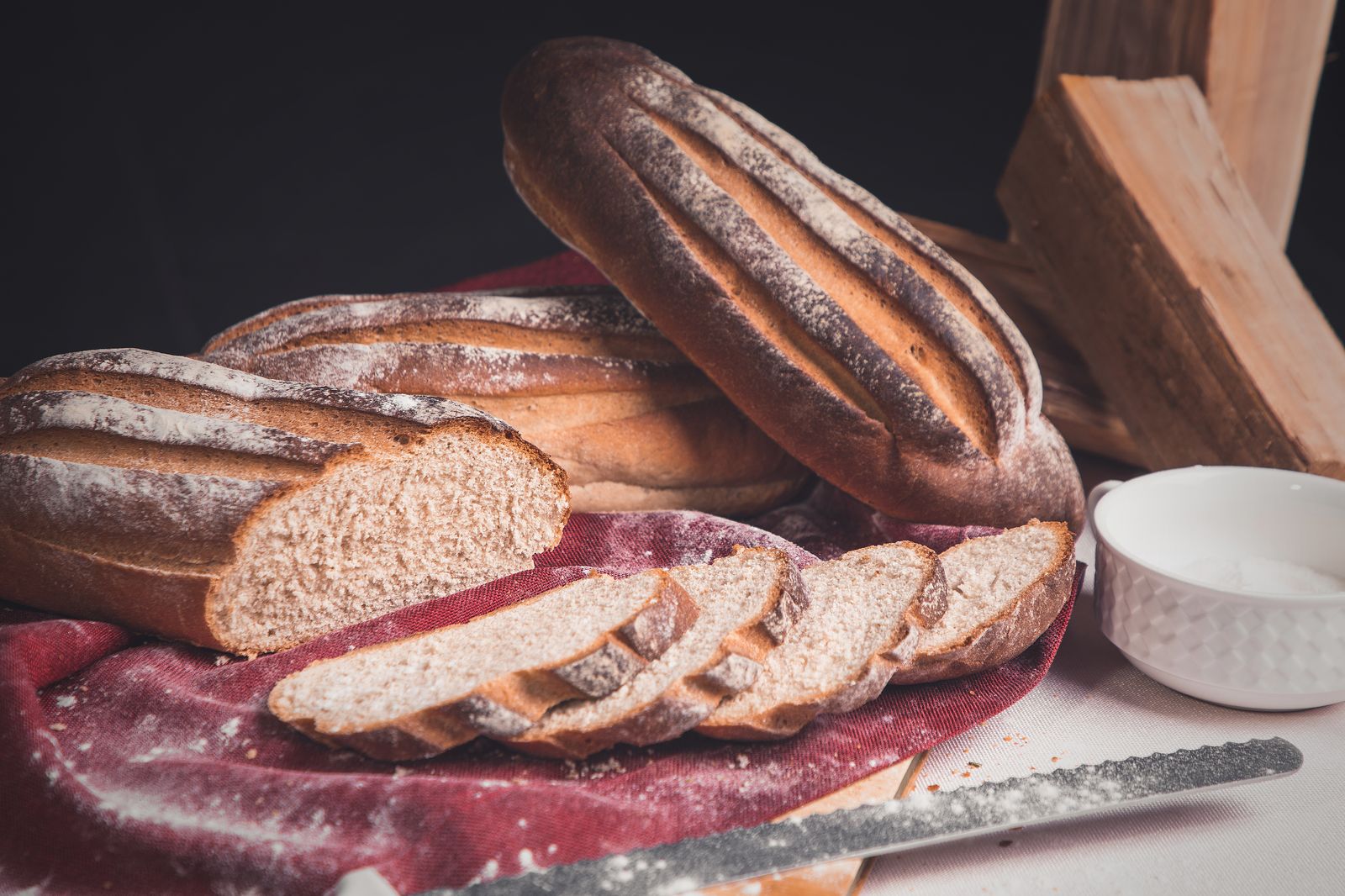
Spelt bread is the heritage-wheat loaf I send beginners home with. If you have ever baked a modern wheat loaf and you fancy trying a heritage grain, spelt is by far the gentlest place to start. The dough handles in ways that feel familiar, the rise behaves itself, and the flavour upgrade is real without demanding the patience that 100% einkorn or rye bread asks of a baker. I teach this recipe in my Cotswolds classes more often than any other heritage-wheat loaf, and it has yet to defeat a student.
The short headline: spelt is a hexaploid wheat (six chromosome sets) like modern bread wheat, where einkorn is diploid, so spelt dough acts more like the bread dough you already know. It still has its quirks (slacker gluten, faster ferment, lower hydration tolerance) but they are corrections rather than reinventions. This loaf contains gluten and is not safe for celiacs.
Quick answer: Spelt bread is the easiest heritage-wheat loaf to bake, because spelt is a hexaploid wheat like modern bread wheat and its dough handles in familiar ways. The main adjustments are lower hydration (about 65 to 70%), a faster ferment, and a gentle hand, since spelt's gluten is slacker and tears easily. A 50/50 blend of whole spelt and strong bread flour gives the best mix of flavour and structure for a first loaf. Spelt is a true wheat, so spelt bread contains gluten and is not safe for celiacs.
What makes spelt bread different from modern wheat bread?
Spelt and modern bread wheat are both hexaploid wheats with 42 chromosomes between them, which is why they behave more similarly than einkorn and modern wheat do. Our einkorn vs spelt comparison covers the ploidy genetics in detail, and the species itself, Triticum spelta, has a history worth reading. The practical differences in a spelt dough come down to a few things.
- Slacker gluten. Spelt has gluten, but the glutenin (the elastic part) is more soluble and breaks down faster than modern wheat glutenin. The dough tears if you push it too hard.
- Lower hydration. Where a modern sourdough boule wants 75-78% hydration, spelt prefers 65-70%. Add the same water and you get pancake batter.
- Faster fermentation. The same starter inoculation ferments roughly 25% faster in spelt than in bread flour. Watch the dough, not the clock.
- Distinctive nutty flavour. Subtler than einkorn or rye but unmistakable next to white bread wheat. The whole-grain version carries a faint sweetness from the heritage protein profile.
For the broader heritage-wheat picture, the einkorn bread post covers the more demanding diploid cousin (and the einkorn-wheat grain page covers the underlying species), the whole grain rye bread recipe is the dense pan-loaf option, and the einkorn flour and spelt flour deep dives cover the related flour-handling questions.
The basic spelt bread recipe
This is the loaf I make most weeks: a 50% whole spelt plus 50% bread flour boule with a sourdough leaven. It also adapts to commercial yeast if you do not keep a starter.
- 100 g (1/2 cup) active sourdough starter, 100% hydration
- 250 g (about 2 cups) whole spelt flour
- 250 g (about 2 cups) unbleached bread flour
- 340 g (scant 1 1/2 cups) lukewarm water
- 10 g (2 tsp) fine sea salt
- Yeasted variant: swap the starter for 5 g (1 1/2 tsp) instant yeast
The sourdough version is the one I teach (about two days with the overnight fridge proof); the yeasted variant gets you a loaf in a single afternoon.
Method, both versions:
- Mix. Combine flours, water, and starter (or yeast) in a large bowl. Cover and rest 30 minutes (this is the autolyse, which lets the spelt flour fully hydrate before salt joins the dough).
- Add salt. Squeeze and fold the salt in by hand. The dough will feel softer than a bread-flour-only dough. That is normal.
- Bulk ferment. Three sets of stretch-and-folds at 30-minute intervals. Then leave at warm room temperature 2-3 hours for sourdough, 1-1.5 hours for yeasted. The dough should rise by about 50-60%, not double.
- Shape. Tip onto a floured counter, fold into a boule, and place seam-side-up in a banneton or a tea-towel-lined bowl dusted with flour.
- Proof. 1-2 hours at room temperature, or overnight in the fridge.
- Bake. Preheat oven and a Dutch oven to 240°C (475°F) for 45 minutes. Score the loaf, lower into the hot Dutch oven, cover, bake 25 minutes. Uncover, drop oven to 220°C (425°F), bake 18-20 minutes more until deeply browned. Internal temperature 95°C (200°F).
- Cool fully on a rack at least 90 minutes before slicing. A spelt loaf finishes its crumb structure during the cool-down.
Why 50/50 instead of 100% spelt?
Pure spelt loaves work, but the dough is slack enough that the loaf wants to spread sideways in the oven instead of rising up. A 50/50 blend with strong bread flour gives the bread structure to hold its shape, while the spelt carries the flavour. A 100% spelt loaf is genuinely worth trying once you have made this one twice; bake it in a pan, accept a slightly denser crumb, and reduce the hydration further to 62-65%.
Three blend ratios worth knowing:
| Blend | Best for | Difficulty |
|---|---|---|
| 25% spelt + 75% bread flour | Spelt-curious modern bread | Easy |
| 50% spelt + 50% bread flour | Everyday heritage loaf | Easy |
| 75% spelt + 25% bread flour | Strong spelt flavour, still holds shape | Medium |
| 100% spelt, pan loaf | Pure spelt experience | Medium-hard |
| 100% spelt, free-form boule | Practice loaf only | Hard, often slumps |
Is spelt easier to digest than modern wheat?
This question shows up in marketing copy more than in peer-reviewed evidence. Some people with non-celiac gluten or wheat sensitivity report better tolerance with spelt than with modern bread wheat. The theory is that spelt’s gluten composition (different gliadin and glutenin ratios) plus historically lower fructan content may produce a milder reaction. The published evidence is mixed and small-scale.
For celiac disease, spelt is absolutely not safe. It contains gluten, full stop. The 20 ppm FDA threshold is the only thing that matters for celiac safety, and a spelt loaf comes in roughly the same gluten range as any wheat loaf. Our is sourdough bread gluten free post covers what fermentation does and does not do to gluten content (short version: not enough for celiacs to eat any wheat sourdough, spelt included).
If your reason for trying spelt is digestive comfort, give a long-fermented spelt sourdough a fair trial over a week of regular eating. If your reason for avoiding wheat is celiac disease, spelt is not the alternative; gluten-free grains is.
How do I eat spelt bread?
Like any good bread, with very little fuss, though a few uses show spelt off particularly well.
- Toast with salted butter and honey. The nutty flavour holds up to strong toppings better than white bread does.
- Sandwich bread. A 50/50 spelt boule slices into excellent sandwich bread that tastes more than the sum of its parts.
- Bread for soup. Spelt’s slightly more open crumb soaks broth well without going to mush.
- Bread for cheese. A 75/25 spelt loaf carries strong farmhouse cheddars or aged goat cheese beautifully.
For the broader sourdough-flour conversation behind this recipe, our best flour for sourdough starter post explains why spelt can work as a starter feed once or twice a week. The USDA FoodData Central spelt entry puts whole spelt flour at roughly 338 kcal, 15g protein, and 10g fibre per 100g, slightly higher in protein than modern whole-wheat flour. The Whole Grains Council spelt page covers the broader history of this 5,000-year-old grain, including the European tradition that kept it in production after most regions switched to modern wheat. Our emmer vs einkorn explainer also covers the broader heritage-wheat-versus-celiac question, and our quinoa history and quinoa flour posts cover the parallel pseudocereal story for readers who need a genuinely gluten-free heritage alternative.
Bake one loaf with the 50/50 blend. Make a second the following week with the same recipe and notice what changes. By the third loaf you will understand why I keep teaching this bread first. Heritage baking does not have to be hard, and spelt is the proof.
Frequently asked questions
Is spelt bread gluten-free?
No. Spelt is an ancient variety of true wheat, so spelt bread contains gluten and is not safe for anyone with celiac disease. Long fermentation lowers the gluten a little but nowhere near the 20 ppm celiac threshold, as our is spelt gluten free post explains.
Can you substitute spelt flour for regular flour in bread?
Yes. Swap it in one-to-one by weight, then reduce the water by about 10 percent, mix gently, and watch the dough rather than the clock, since spelt has slacker gluten and ferments faster. For a first loaf, blend half spelt with half strong bread flour so it holds its shape.
Is spelt bread healthier than regular wheat bread?
It is slightly more nutritious, not dramatically so. Whole spelt flour runs a touch higher in protein and comparable in fibre to modern whole wheat, and many bakers prefer its flavour. It is still a wheat bread with real carbohydrates and gluten, so treat “healthier” as a modest edge, best captured by using the whole-grain version.
Stock up on Spelt
See our hand-picked Spelt, from flour to whole grain, with the brands worth buying.
Shop Spelt →